


James Hetfield Says Keep Politics Out of the Pit as Metallica Fans Debate Music and Message

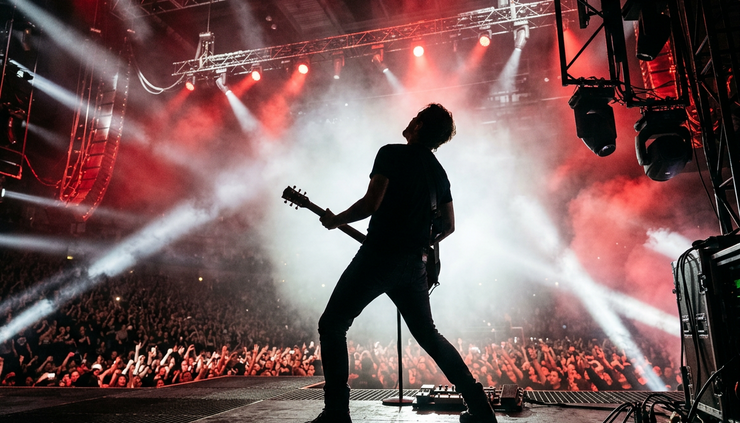
James Hetfield did not need a Senate podium to start a national argument. He had a microphone, a very loud band, and the Las Vegas Sphere, which is basically what happens when a planetarium eats a rock arena and discovers distortion pedals.
During Metallica’s October 10, 2026, performance at the Sphere in Las Vegas, Hetfield reportedly made comments urging musicians to avoid turning concerts into political rallies and to let music serve as a point of unity. By October 14, fan clips, music sites, and the usual internet drum circle had pushed the remarks into a broader debate over politics at concerts, artist responsibility, and whether buying a ticket means agreeing to hear a worldview between riffs.
The cleanest version of the story is this: Hetfield emphasized togetherness. The messier version is everything that happened after, because nothing says “unity” quite like thousands of people arguing online in all caps.

What James Hetfield said and what can be verified
The central claim circulating after the show is that Hetfield told the crowd, in effect, that Metallica’s stage was a place for connection rather than political campaigning. Reports and fan-recorded video shared after the October 10 Sphere performance describe him framing music as common ground, not a party platform.
As of October 14, the careful approach is to avoid dressing paraphrase as scripture. No official full transcript from Metallica has been treated publicly as the definitive record of every word. That matters, because online, one sentence can go through the blender faster than a deli pastrami slicer in Midtown.
What appears consistent across coverage is the theme: Hetfield encouraged fans to come together through music. He did not appear to call for artists to be legally silenced, nor did he present the issue as a formal policy plank. The remarks landed more like a stage-side philosophy from a veteran frontman who has spent decades watching strangers bang heads in rough emotional agreement.
That distinction matters for anyone searching Metallica James Hetfield political views. A comment about keeping a concert focused on unity does not automatically equal a full political manifesto. Sometimes a singer says, “Let’s share the moment,” and the internet hears, “Release the think pieces.”
Why the reaction got so loud so fast
Metal fans are not strangers to big feelings. This is a community that can debate guitar tone with the intensity of a Supreme Court confirmation hearing. So Hetfield’s remarks were never going to float away quietly into the Nevada night.
Some fans praised him for defending the concert as a rare public space where people with different beliefs can stand shoulder to shoulder, spill a drink, and scream the same chorus. Others argued that art has always been political, especially in rock, punk, hip-hop, folk, and metal. If music reflects life, they ask, how could it avoid war, injustice, inequality, or civil rights?
Both sides have a point.
Concerts are expensive. A New York fan flying to Vegas, booking a hotel, and buying merch may not want a surprise civics seminar wedged between “Enter Sandman” and the next fireball. At the same time, artists are not jukeboxes with cheekbones. They are people, often with strong beliefs, and those beliefs can shape the songs fans already love.
The phrase Metallica politics controversy has gained traction because it sounds bigger and spicier than the available facts. The wider conversation also folds in James Hetfield political statements, musicians and political activism, and the search buzz around Metallica Sphere Las Vegas 2026. That is a lot of weight for one onstage comment to carry. Even the Sphere might ask for help.

The artist’s right to speak is not the same as the crowd’s duty to clap
The debate gets clearer when both ideas stay in the room.
Artists have freedom of expression. That includes saying things fans dislike. It includes supporting causes, condemning policies, raising money, and using their platform during moments of crisis. American music history is full of it, from protest folk to punk to hip-hop to benefit concerts.
Audiences also have freedom of reaction. They can cheer, boo, leave, post, stop buying tickets, or continue showing up because the snare sound still cures whatever is wrong with their week.
The tension is not new. What is new is the speed. A comment once heard by one arena now becomes national content before the parking lot clears. The modern concert has three audiences:
The people in the room
The people watching clips the next morning
The people arguing from captions without watching the clip at all
That third group is where nuance goes to put on a tiny hat and disappear.
Hetfield’s unity message fits a common frustration among some concertgoers: they want live music to offer escape. Yet the counterargument remains strong. For many artists, silence can feel like a statement too, especially when fans are affected by the issues being discussed.
Macklemore, Ed Sheeran, and the hard question of tour politics
The controversy surrounding Macklemore and tour dates connected in public discussion to Ed Sheeran shows why this issue refuses to stay tidy.
Macklemore has drawn intense attention for political comments and songs related to the war in Gaza and U.S. foreign policy. Supporters see him as using his platform to speak about human rights. Critics argue that some remarks and slogans have been inflammatory or alienating, especially in a pop concert setting where fans may not expect a political address.
Ed Sheeran, a global pop headliner with a famously broad audience, brings another layer. When politically outspoken artists share a bill, open a tour, or become part of the same touring conversation, the headliner can face pressure from multiple directions. Some fans want stronger moral stands. Others want separation between the music and the message. Promoters, meanwhile, would probably prefer everyone discuss set times and parking instead of geopolitics. Good luck with that.
The Macklemore example differs from Hetfield’s comments, but the overlap is clear. Both stories ask who gets to define the purpose of a concert. Is it escape, expression, community, protest, entertainment, or some loud soup made of all five?

The fairest read of James Hetfield’s point
The most balanced interpretation is not that Hetfield wants artists muzzled. It is that he values the concert as a shared space. For Metallica, a band whose songs have dealt with war, addiction, control, anger, faith, and grief, that is not the same as avoiding serious subjects. Metallica has never been elevator music for tax attorneys.
What Hetfield seemed to push back on was the feeling of a show being overtaken by an agenda. That word matters. Fans often accept meaning in music. They may resist feeling recruited.
Still, musicians do not stop being citizens when the stage lights come on. The responsibility question cuts both ways. Artists should be thoughtful about time, place, tone, and the safety of fans who may feel targeted. Audiences should also recognize that art without conviction can get pretty bland. Nobody needs a heavy-metal version of unsalted oatmeal.
A useful standard might be this: say what you believe, but do not treat the crowd as props. Give fans music, context, honesty, and room to respond. That does not settle every dispute, but it beats turning every arena into a cable news panel with better pyro.
The takeaway from the pit
Hetfield’s Sphere comments caught attention because they touched a nerve that runs through modern live music. Fans want connection. Artists want expression. Everyone wants the person behind them to stop filming the entire ballad on a glowing tablet the size of a diner menu.
The debate will not end with Metallica, Macklemore, Ed Sheeran, or the next viral clip. It will keep showing up wherever music gathers people with different lives into one loud room.
For now, Hetfield’s message lands best as a reminder, not a gag order. Music can make space for unity, even when the people inside that space disagree. The trick is keeping the volume high enough for the songs, and low enough for each other.


Feel free to comment! 😀