


Tyler Perry Doing Life Review Love Tears and Rushed Ending

Tyler Perry’s Doing Life sounds like the kind of movie built to test your tissue supply and your patience at the same time. Based on online viewer reactions, it has romance that works, characters worth rooting for, and emotional scenes that know exactly where the tear ducts live. It also seems to have a screenplay that occasionally sprints through material that deserved a slower walk.
That mix is very Perry. The ingredients are familiar: a struggling single mother, a man carrying the weight of his past, family drama that could power a neighborhood generator, and a love story asking whether people deserve another chance. Viewers know the recipe. Many still want a plate.
The most interesting response to Doing Life is not that people cried. With this kind of movie, tears are practically part of the ticket price. The more revealing reaction is that several viewers appear to have cared about Anika and Carousel even while noticing the story’s shortcuts. That says something. When a romance survives a rushed final act, the chemistry is doing real work.
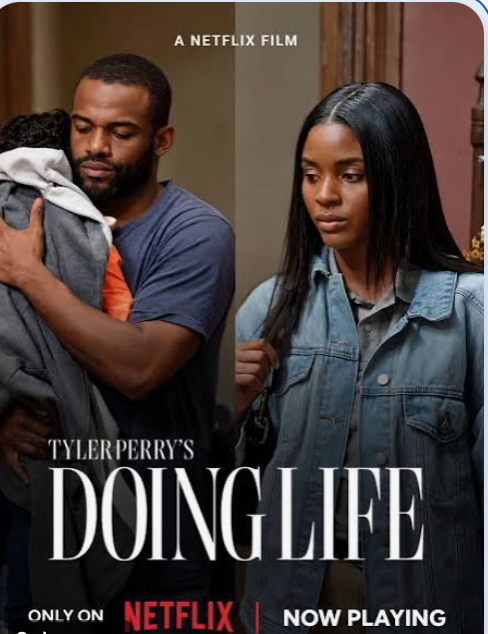
The romance seems to be the strongest reason to watch
The best thing a romantic drama can do is make the couple feel worth the trouble. From the online reactions described, Doing Life clears that bar more often than not. Viewers on Reddit seemed especially drawn to the connection between Anika and Carousel. That matters because this story appears to ask for a lot of emotional investment quickly.
Anika is not entering the story from a place of ease. She is a single mother trying to survive, protect her home, and make choices under pressure. Carousel brings a complicated past, including the shadow of incarceration and the hard work of rebuilding a life. Put them together, and the movie has a built-in question: can love grow when both people are carrying more than flowers and compliments?
That setup can turn corny fast if the leads do not click. When viewers say they rooted for the couple even while recognizing the usual Tyler Perry framework, the romance is doing its job. The audience may know where the road leads, but they still care who arrives.
Perry’s romances often work best when the emotions are large but easy to understand. People want forgiveness. People want safety. People want somebody who sees the tired parts and does not run away. Doing Life seems to live in that zone. It may not reinvent the romantic drama, but it appears to understand why audiences return to it.
There is comfort in watching people choose each other after pain. There is also danger in making that choice look too easy. The reactions suggest Doing Life balances those forces in the first stretch better than it does near the end.
The familiar Tyler Perry ingredients are all here
No one should walk into a Tyler Perry drama expecting a quiet little movie where everybody communicates calmly and the biggest conflict is who forgot to buy oat milk. Perry does melodrama. He does heightened family wounds. He does big moral choices and scenes designed to make at least one relative in the room say, “See, that’s what I was talking about.”
Doing Life appears to follow that tradition closely.
The elements mentioned in viewer reactions are classic Perry territory:
A woman under pressure, trying to hold life together
A man with a painful past and a possible future
Family tension that pushes the romance into crisis
A redemption arc that asks the audience to believe people can change
Emotional turns that go straight for the chest
That familiarity can be a weakness or a strength. For some viewers, familiar tropes feel lazy. For others, they feel like genre promises. If someone orders a Tyler Perry movie, they are probably not demanding icy restraint and two hours of people silently staring through rain-streaked windows. They want feelings. They want conflict. They want somebody’s auntie, cousin, parent, or ex to behave so badly that the living room becomes a courtroom.
One Reddit reviewer reportedly recognized Perry’s usual tropes but still rooted for the couple. That is the key. Familiarity becomes a problem when the movie coasts on it. It becomes useful when it gives the audience a doorway into characters they actually care about.
The trick is depth. A familiar story can still feel fresh if the people inside it feel specific. A single mother is not a personality. A man with a record is not a full character by itself. Family drama is not meaningful just because someone raises their voice. The best version of Doing Life would use those ingredients as a starting point, not the whole meal.
The tears seem earned, even when the script hurries
There is a difference between emotional storytelling and emotional button-pushing. Based on the reactions, Doing Life seems to land somewhere in the middle, with enough sincerity to win over viewers even when the script moves too quickly.
That matters because Perry’s films often invite strong responses from both fans and critics. His supporters value the directness. His detractors sometimes see the same directness as overselling. Doing Life sounds like a movie where both sides would find evidence.
On one hand, viewers respond to the tenderness between Anika and Carousel. The romance brings warmth. The premise offers a clear path for redemption and healing. The story appears built around people trying to move forward after life has cornered them.
On the other hand, a rushed final act can make even heartfelt moments feel undercooked. If the ending arrives too fast, the audience does not get enough time to feel the consequences. A conflict that should take scenes to resolve can start to feel like it got solved because the runtime checked its watch.
That is especially risky in a story about rebuilding. Rebuilding a life after incarceration is not a montage problem. It touches housing, work, trust, family, shame, pride, and fear. A romance can be part of that healing, but it should not become a magic mop that cleans the whole floor.
If viewers came away crying, the movie clearly hit emotional notes. If some also came away wishing the final act had slowed down, that suggests the tears were not the issue. The issue was space. The story needed more room to breathe after asking the audience to care.
The screenplay seems interested in big subjects, but not always ready to carry them
The Letterboxd reaction described in the brief raises the sharpest critique: Doing Life brings up incarceration, ambition, and rebuilding a life, but may not explore them deeply enough.
That is a serious complaint because those subjects carry real weight. You cannot treat them like decorative throw pillows. If a movie introduces incarceration as part of a character’s history, it also introduces questions about stigma, accountability, survival, and reintegration. If it introduces ambition, it has to ask what the character wants beyond romance. If it introduces rebuilding, it has to show the cost of starting over.
The critique that the movie “invites them to dinner” but does not truly seat them is funny because it feels precise. Some stories bring major themes into the room and then act surprised when those themes need dialogue, time, and care.
Carousel’s past, for example, could open a door to a richer look at how someone earns trust again. Not in a simple “prove you are good now” way, but in a daily, ordinary, frustrating way. What work can he find? Who believes him? Who refuses to? What habits has prison left behind? What does freedom feel like when the outside world keeps reminding him where he has been?
Anika’s side deserves the same depth. If her story centers only on whether she can love Carousel, the movie risks shrinking her life around his redemption. That does not mean romance diminishes her. Love can be part of a full life. The issue is whether the screenplay gives her enough of her own.
A good romantic drama lets both people arrive with hopes, flaws, and futures. A weaker one gives one person a journey and the other a reaction shot.
Anika needed more screen time for her own dreams
The most persuasive criticism in these reactions is the call for more attention to Anika’s goals. That point matters because it gets at a common weakness in melodrama. Women in these stories are often asked to suffer beautifully, love bravely, forgive meaningfully, and hold the moral center. That is a lot of work. They also deserve wants that are not exclusively tied to a man’s growth.
Anika can fall in love and still want more money, more peace, a better home, education, creative work, a career, or simply a version of life where nobody is constantly testing her strength. The audience does not need every dream spelled out in a monologue. A few well-placed scenes can do the job.
Show her making a plan.
Show what she sacrifices.
Show the thing she wants when no one else is in the room.
Show what love costs her, and what it gives back.
Without that, Anika risks becoming the emotional landing place for Carousel’s story. She becomes proof that he can be loved, proof that he can change, proof that the past does not own him. That may serve his arc, but it only partially serves hers.
The brief’s joke that “her dreams auditioned too” lands because it points to a real storytelling issue. Anika’s ambition should not have to wait outside while the romance gets all the close-ups.
This does not mean Doing Life fails her entirely. Viewers clearly connected with her and with the relationship. It means the movie may have left its most interesting character material on the table.
The rushed ending sounds like the main problem
A rushed ending can make a good movie feel less satisfying than it should. It does not erase the strong scenes that came before it, but it changes the aftertaste.
According to one enthusiastic Reddit reaction mentioned in the brief, the final act felt rushed even though the viewer loved the Anika and Carousel connection. That kind of response is common with stories that build emotional stakes carefully, then resolve them too neatly.
The final act of a romance has a specific job. It has to test the relationship in a way that feels honest. It has to force choices that reveal character. It has to make reconciliation, separation, or commitment feel earned. If the movie skips steps, viewers feel the missing pieces even if they cannot name them.
What might have helped?
More time with Anika after the major conflict
More detail about Carousel’s practical path forward
A clearer emotional consequence for the family drama
A slower resolution that lets trust rebuild instead of snapping into place
A final scene that feels discovered, not delivered
The phrase “love is patient, but the ending had somewhere to be” captures the problem neatly. Romance stories rely on timing. Move too slowly, and the audience gets restless. Move too quickly, and the emotions do not fully settle.
Doing Life seems to know how to start a fire. The complaint is that it may leave before checking whether the meal is cooked.

The movie’s biggest strength may also be its limit
Tyler Perry has a clear storytelling instinct: get to the emotion. That instinct has made his work connect with a huge audience. He does not hide the point behind layers of irony. Characters hurt, love, betray, repent, and forgive in ways that are direct and easy to follow.
That directness can be powerful. It can also flatten stories that need complexity.
Doing Life appears to sit right at that crossroads. The love story works because it is sincere. The emotional moments work because the movie is not embarrassed by feeling. The redemption arc works because audiences want to believe people can become more than their worst chapter.
The limits show up when the same directness meets subjects that need texture. Incarceration is not just a backstory. Ambition is not just a line of dialogue. Rebuilding is not just a romantic promise. These areas need mess, contradiction, and time.
That is why some viewers can enjoy the movie and still wish another writer had been in the room. Not because Perry lacks emotional instinct. He clearly has it. The wish comes from wanting someone to ask, “What happens between these big scenes?” and “Whose story are we leaving out while we chase the next tear?”
A co-writer or stronger script development process might have pushed the movie past its comfort zone. It could have kept the warmth while adding more depth. It could have made the final act feel less like a deadline and more like a destination.
The verdict on Doing Life
Based on the viewer reactions, Doing Life sounds like a heartfelt Tyler Perry romance with real emotional pull and a screenplay that sometimes needs supervision. The core relationship between Anika and Carousel seems strong enough to carry much of the movie. The tears sound genuine. The family drama sounds very on-brand. The desire for redemption gives the story a sturdy emotional engine.
The weaknesses also sound clear. The final act may move too fast. The film may raise serious themes without giving them enough room. Anika’s personal goals could use more attention. The romance works, but the movie might rely on that romance to do jobs the screenplay should have handled.
So who is this for? If Tyler Perry’s emotional dramas usually work for you, Doing Life probably offers the familiar pleasures: love under pressure, second chances, big feelings, and characters trying to outrun the past. If you need a tightly structured script that fully examines every theme it introduces, this one may frustrate you.
The fairest read is that Doing Life is not empty, but it may be incomplete. It has heart. It has chemistry. It has the kind of scenes that make viewers reach for tissues and then complain because they cared enough to want more.
That is a better problem than boredom. A dull movie leaves no wound. Doing Life seems to leave viewers saying, “I felt that,” followed quickly by, “Now why did you rush me out of the room?”
Bring tissues. Bring patience. And if the screenplay asks for a ride home, maybe let Anika drive.


Comments