


The Liberating Truth: Why Your Inevitable Obscurity Should Set You Free
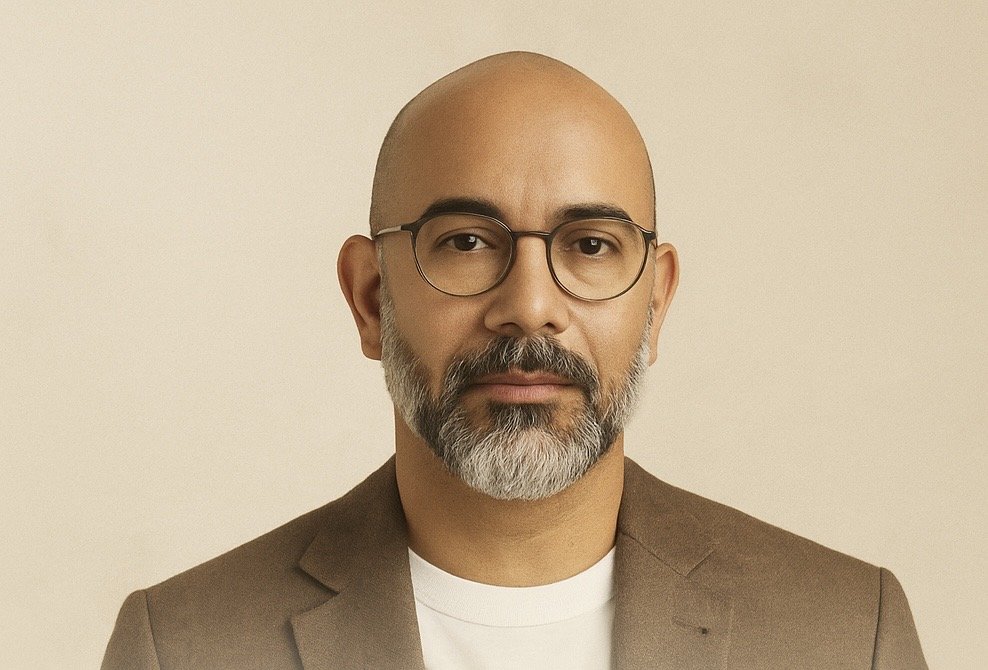
By Dr. Wil Rodríguez
For TOCSIN Magazine
One Hundred Years from Now
One hundred years from now, you will be dead. So will I. So will everyone reading these words.
A stranger will live in your house—perhaps remodeling the kitchen you agonized over, painting over the accent wall you thought was so bold, tearing down the fence you installed with your own hands on a sweltering Saturday afternoon. Your car—that machine you polish on weekends, that status symbol you financed over five years, that extension of your identity—will be compacted metal, rusting in a junkyard somewhere in Ohio or reborn as part of a refrigerator humming quietly in someone’s kitchen in Shanghai.
Everything you’ve spent decades building, accumulating, protecting, perfecting? Gone. Dispersed. Given away to relatives who’ll hold a yard sale. Sold off to strangers who won’t know or care about the stories these objects held. Forgotten like yesterday’s weather report.
Your name will fade within two or three generations, becoming little more than a faint notation on a genealogy website no one visits, a name on a census record gathering digital dust, a headstone in a cemetery where grass grows wild and visitors become increasingly rare.
The Question That Changes Everything
Let me ask you something that might shake you: Do you know your great-great-grandparents’ full names? Not just their surnames—their complete names, the names they were called by friends, the nicknames whispered by lovers?
Can you tell me their stories? Their dreams that kept them awake with hope? Their fears that haunted them in the darkness? The tragedies that broke them? The triumphs that defined them? The daily routines that made up the texture of their lives?
Do you know what kept them awake at night staring at bedroom ceilings? What made them laugh until tears rolled down their faces and their sides ached? What songs they hummed while working? What foods reminded them of home? What regrets they carried to their graves?
Most of us cannot answer these questions with any specificity. We might know fragments—“Grandpa’s father was a farmer” or “Great-grandma came from Italy”—but the full, rich, complex humanity of these people? Lost. Evaporated like morning dew.
And these were people who shared our DNA, whose lives made our existence possible, whose struggles ensured our survival. These were people who loved as deeply as we love, who worried as intensely as we worry, who felt their lives were just as significant as we feel ours are now.
If we’ve forgotten them—people separated from us by merely a century, connected to us by blood and lineage—what hope do we have of being remembered? What possible chance does your carefully curated LinkedIn profile have of mattering in 2125?
The Mathematics of Insignificance
Here’s where the scale of reality becomes almost incomprehensible, where our human brains struggle to grasp the enormity of our cosmic context.
We live on a rock—a beautiful, fragile, water-covered rock—hurtling through the vacuum of space at over 1,000 kilometers per hour. You’re traveling at this speed right now, reading this article, feeling perfectly still. This rock orbits an unremarkable star we call the Sun, one yellow dwarf among countless others, located in the unfashionable suburbs of a spiral galaxy we’ve named the Milky Way.
Our galaxy contains approximately 400 billion stars—that’s 400,000,000,000 burning spheres of nuclear fusion, each potentially hosting planetary systems, perhaps teeming with their own forms of life, their own civilizations, their own philosophers wondering about their place in the cosmos.
And the Milky Way? It’s just one galaxy among an estimated two trillion galaxies in the observable universe—and the observable universe might be just a fraction of what actually exists beyond the horizon of what light has had time to reach us.
Scientists estimate there are roughly 400 million septillion stars in existence—that’s a four followed by twenty-three zeros: 400,000,000,000,000,000,000,000 stars. Four hundred million trillion trillion glowing spheres of nuclear fusion, each representing an entire solar system’s worth of possibility.
Against this cosmic backdrop, our anxieties about a critical email that hasn’t been returned, a social media slight from someone we barely know, a career setback that feels devastating, or what someone said about us at last week’s meeting shrink to subatomic proportions.
The universe—vast, ancient, indifferent—does not care about your mortgage payment, your quarterly performance review, your relationship status, or whether your vacation photos get enough likes. It will continue expanding, stars will continue burning and dying, black holes will continue consuming matter, whether you get that promotion or not.
The Prison We Build from Thoughts
We spend our lives accumulating—possessions, achievements, credentials, grievances, worries, anxieties. We construct elaborate mental prisons from concerns that will matter to precisely no one in a hundred years, often not even to ourselves in a hundred days.
That argument with your sibling about who said what at Thanksgiving dinner? In fifty years, you’ll both be struggling to remember each other’s faces clearly. Forgotten, or remembered only as a vague unpleasantness.
That embarrassing moment in high school when you tripped in the cafeteria and everyone laughed? The witnesses have their own embarrassments consuming their thoughts. They’ve forgotten yours completely. It lives only in your memory, a ghost you keep alive through repeated visitation.
The promotion you didn’t get, the one that felt like a referendum on your worth as a human being? The company might not exist in twenty years. The boss who passed you over will retire, move away, or die. The entire organizational chart will be reshuffled, reformed, or dissolved.
That perfect Instagram feed you’ve curated with such care, each image filtered and composed to project an aspirational lifestyle? The platform itself will eventually join MySpace and Friendster in the digital graveyard. Those servers will be shut down, that data will be deleted, that carefully constructed identity will evaporate into electromagnetic nothingness.
We operate under a persistent delusion of permanence, as if our current problems and preoccupations will echo through eternity like ripples in a cosmic pond. We treat our reputation as if it were a priceless heirloom to be preserved, polished, and passed down through generations, when in reality it’s more like a sandcastle at high tide—beautiful perhaps, lovingly constructed, but temporary by its very nature.
When you really sit with this, when you let it penetrate the defensive layers of denial we all maintain, you realize that ninety-nine percent of what consumes our mental energy today is, from any meaningful long-term perspective, completely without consequence.
The Paradox That Changes Everything
Here’s where this meditation on mortality and insignificance takes an unexpected turn—a turn that might surprise you, might even disturb the part of you that expected this to descend into nihilistic despair.
This isn’t depressing. This is profoundly, radically, almost impossibly liberating.
If nothing ultimately matters in the grand cosmic scheme, then paradoxically, everything immediately matters right here, right now.
When you truly internalize—not just intellectually understand, but deeply, viscerally internalize—that your time is finite, that your legacy is a brief flicker against the darkness, that the universe will not remember your failures or your triumphs, that you are simultaneously utterly insignificant and completely unique, something remarkable happens.
Something shifts in your consciousness.
You become free.
Free from the paralysis of perfectionism that keeps you from starting that project because it might not be flawless.
Free from the tyranny of others’ opinions, from the exhausting performance of being who you think people expect you to be.
Free from the crushing weight of trying to build something permanent in a fundamentally impermanent universe, like trying to carve your name in running water.
Free from the fear of failure because failure, like success, is temporary—a fleeting state in a fleeting existence.
Free from the burden of grudges because holding onto resentment requires energy you don’t have time to waste.
The awareness of your own cosmic insignificance doesn’t diminish the value of your life—it clarifies it, illuminates it, reveals what actually deserves your finite attention and your irreplaceable presence.
Living Inside the Liberation
If no one will remember you—if your name will fade, your achievements will be forgotten, your carefully accumulated possessions will be scattered—then why not:
Take that risk you’ve been postponing for years? Start that business. Write that book. Make that art. Learn that instrument. Travel to that place. Have that difficult conversation. The worst that happens is you fail, and failure and success become equal when you realize they’re both temporary states in a temporary existence. The entrepreneur whose company fails and the one whose company succeeds end up in the same place eventually—forgotten. So you might as well try.
Forgive that person who hurt you? Holding onto resentment is like drinking poison while waiting for your enemy to die—and you’re both dying anyway, cell by cell, day by day. The person who hurt you is probably barely thinking about it, or has already died themselves. You’re spending your precious, limited consciousness replaying old grievances that matter to no one but you. Let it go. Not because they deserve forgiveness, but because you deserve freedom.
Pursue what genuinely brings you joy rather than what looks impressive? There’s no eternal audience that will remember whether you chose the prestigious career or the fulfilling one, whether you drove the luxury car or the reliable one, whether you lived in the fashionable neighborhood or the comfortable one. The grave makes equals of us all. So choose joy over status, choose meaning over appearance, choose the life that feels true over the life that looks good in photos.
Tell the people you love that you love them? Don’t wait for the right moment, the perfect words, the appropriate occasion. These fleeting connections—these brief moments when consciousness recognizes itself in another consciousness—are the only things that feel real against the void. Say it now. Say it clumsily. Say it often. Because one day, very soon in cosmic terms, you won’t be able to say it at all.
Stop comparing yourself to others in this absurd competition we’ve invented? You’re running different races toward the same finish line: oblivion. The person with more money, more followers, more achievements, more recognition? They’re dying too. Their time is running out too. Their name will be forgotten too. The playing field is perfectly level at the end. So stop measuring yourself against arbitrary standards and start living according to your own values.
Embrace your weirdness, your authentic self, your unconventional dreams? The opinions of others have a shorter shelf life than you do. The people judging you today will be gone tomorrow. Their judgments will die with them. But your unlived life—the authentic you that you suppressed to win approval from people who are now dust—that’s the real tragedy. Be who you are, fully and unapologetically, because you won’t get another chance.
The Only Legacy That Matters
If this cosmic perspective teaches us anything, it’s that the only legacy that truly matters is the one that lives in the present moment—not in the distant future, not in the history books, not in the memories of people who will themselves be forgotten.
The kindness you showed to a stranger who was struggling—that mattered in that moment, changed that moment, made that moment more bearable for someone who needed it.
The laugh you shared with a friend, the moment of genuine connection when words flowed easily and time seemed to stop—that mattered, even though neither of you will remember the specifics in twenty years.
The moment of beauty you paused to appreciate—that sunset, that piece of music, that line of poetry—that mattered because you were present for it, because consciousness briefly woke up to itself and said “this is extraordinary.”
The burden you helped someone carry, literally or figuratively, when they couldn’t manage it alone—that mattered to them in that moment, even if they’ve forgotten your name.
These things don’t echo through eternity. They don’t build monuments. They don’t ensure your name appears in future textbooks. They don’t need to.
They matter because they matter now, to someone who is alive now, in this brief, extraordinary, improbable moment when consciousness emerges from matter and gets to experience itself.
This is the real legacy—not what persists after you’re gone, but what you create while you’re here. Not the breadth of your impact, but the depth of your presence.
The Daily Practice of Dying
Start each day with this meditation, this memento mori for the modern age: I am going to die. Everyone I know is going to die. Nothing of what worries me today will matter in a century. Perhaps not even in a year.
This isn’t morbid. This is clarifying, focusing, sharpening.
It’s a blade that cuts through the nonsense—the social media drama, the office politics, the consumer culture, the status anxiety, the comparison trap, the fear of judgment—and reveals what’s real beneath all the constructed artifice.
What’s real is: this breath moving in and out of your lungs. This conversation with someone you care about. This moment of sunlight warming your face. This opportunity to be kind when you could be cruel. This chance to be brave when you could play it safe. This invitation to be present when you could be distracted.
The universe is vast beyond comprehension—so vast that numbers lose meaning. You are small within it—so small that your existence is a statistical impossibility, a miracle wrapped in ordinary skin. Your time is limited—so limited that every moment you waste is a small tragedy.
And that, paradoxically, is the best news you’ll hear all day.
REFLECTION BOX: THE READER’S RESISTANCE
I can feel you resisting this. Part of you is saying: “But what about my children? My work? My art? Those will outlast me. Those matter beyond my death.”
And yes, they might. Some of us will leave children who remember us fondly. Some will create work that influences others. A handful might even achieve something resembling historical significance.
But ask yourself honestly: Does that change the fundamental truth? Your children will die too. Their memories of you will die with them. Your work will eventually be forgotten, superseded, or lost. Even Shakespeare, Einstein, and da Vinci will be forgotten when human civilization ends, when the sun expands and consumes the Earth, when the universe reaches heat death.
The question isn’t whether you’ll be remembered. The question is: Why do you need to be?
What if the desperate desire to be remembered is itself the problem—a refusal to accept our temporary nature, a grasping after permanence in an impermanent universe?
What if liberation comes not from leaving a legacy, but from releasing the need for one?
The Freedom at the End of the Path
Because it means you’re free, genuinely and completely free.
Free to live without the suffocating weight of permanence pressing down on every decision.
Free to fail without catastrophe, because failure isn’t permanent either.
Free to love without calculation, without wondering what you’ll get in return, because the return on investment becomes meaningless when you realize there’s no portfolio to leave behind.
Free to be exactly who you are, right now, in this improbable moment of consciousness, without worrying about how you’ll be judged by people who won’t exist.
Free to choose the hard right over the easy wrong, because reputation is temporary but integrity is immediate.
Free to forgive yourself for your past mistakes, because the person who made them is already gone—you are literally made of different cells now than you were seven years ago.
Free to start over, to change course, to admit you were wrong, to become someone new, because the old you won’t be remembered anyway.
One hundred years from now, no one will remember your name. Your house will belong to strangers. Your car will be scrap metal. Your social media accounts will be deleted or abandoned. Your achievements will be footnotes, if that.
So stop trying to impress people who won’t exist and start living for the only moment you actually have—this one, right here, right now.
The liberation isn’t in building something that lasts forever, in chasing immortality through achievements or offspring or monuments.
The liberation is in finally, fully, courageously accepting that nothing does last—nothing can last—and that this fundamental impermanence is not a bug in the system but the very thing that makes any of it meaningful at all.
We are temporary expressions of an evolving universe, brief fluctuations of organized complexity in the general march toward entropy. We are stardust that learned to think, atoms arranged briefly into consciousness before dispersing again into the cosmic whole.
And that is enough. More than enough. It is everything.
TOCSIN MAGAZINE INVITATION
Want more perspectives that challenge conventional thinking and force you to reconsider everything you thought you knew?
Subscribe to TOCSIN Magazine — where we sound the alarm on ideas that matter, even when (especially when) they make you uncomfortable.
We don’t offer easy answers — we offer better questions.
Join a community of bold readers, thinkers, and writers who seek meaning beyond comfort and truth beyond popularity.
🔹 Visit www.tocsinmag.com
Be part of a movement unafraid to confront difficult truths — and to be transformed by them.

Comments