


The Citizenship Papers: How One Executive Order Threatens the Foundation of American Democracy
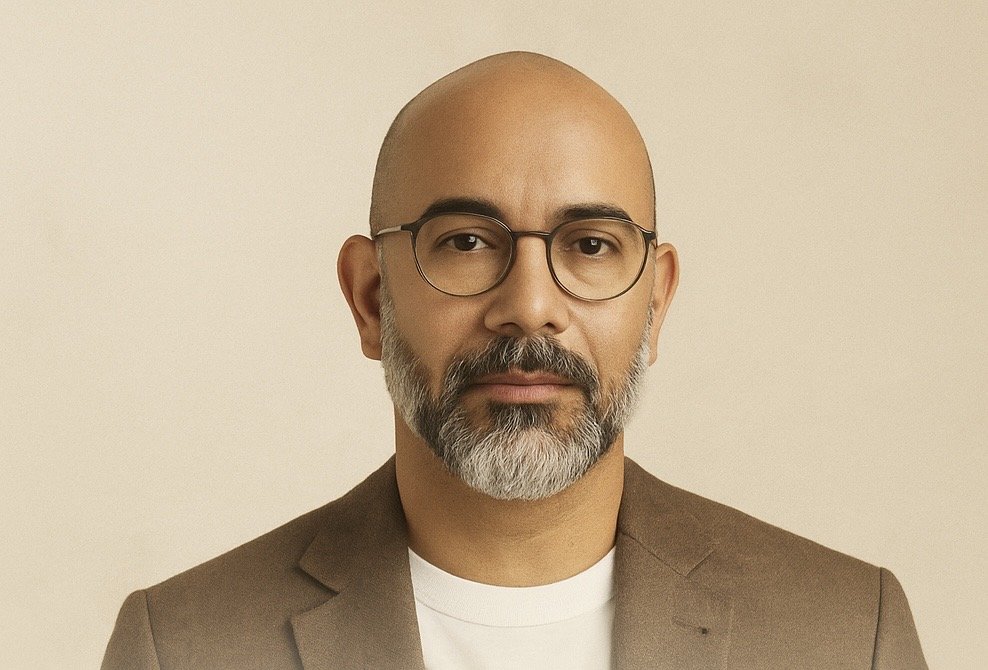
By Dr. Wil Rodriguez
For Tocsin Magazine

In the sterile corridors of the Eisenhower Executive Office Building, where the machinery of American governance churns quietly behind closed doors, a single signature on March 25, 2025, may have altered the trajectory of democratic participation for generations to come. President Donald Trump’s executive order requiring documentary proof of citizenship for voter registration represents far more than a bureaucratic adjustment—it constitutes a fundamental recalibration of who gets to call themselves an American voter.
The order, euphemistically titled “Preserving and Protecting the Integrity of American Elections,” arrives wrapped in the familiar rhetoric of election security. Yet beneath its administrative veneer lies a profound question that has haunted American democracy since its inception: Who belongs, and who decides?
The Paper Trail of Democracy
To understand the seismic implications of this executive action, one must first grasp the elegant simplicity of what it destroys. For decades, the federal voter registration process relied on an honor system as old as the republic itself—a citizen’s sworn attestation of their eligibility. This wasn’t carelessness; it was constitutional design. The founders, having fled the suffocating bureaucracy of monarchical Europe, understood that democracy dies not from fraud, but from the barriers erected in its name.
Now, with the stroke of a pen, that principle lies in ruins. The new requirements are deceptively straightforward: a U.S. passport, a REAL ID-compliant identification showing citizenship, or military identification proving citizenship. For millions of Americans, these documents might as well be moon rocks.
Consider Maria Santos, a 67-year-old retired factory worker from Phoenix whose birth certificate was lost in a house fire twenty years ago. Born in a small Texas border town when record-keeping was haphazard, she has voted in every election since 1976. Under the new order, her decades of civic participation mean nothing without the right paperwork. She is not alone—she is legion.
The Architecture of Exclusion
The executive order’s supporters frame it as common sense: of course, only citizens should vote. But this framing reveals a fundamental misunderstanding of both the scope of existing protections and the nature of voting fraud in America. Non-citizen voting, despite inflammatory rhetoric, remains vanishingly rare. Studies consistently show fraud rates of 0.0003% to 0.0025%—statistically negligible in a nation of 330 million people.
What the order creates, instead, is a labyrinthine system of exclusion that falls heaviest on those least equipped to navigate it. The elderly, who may lack passports and whose birth records predate modern documentation standards. The poor, for whom a $165 passport represents weeks of groceries. Rural Americans, whose nearest passport office may be hours away. Native Americans on reservations, whose complex citizenship history creates unique documentation challenges.
The Constitutional Collision
The legal challenges mounting against the order—nineteen states have filed suit—rest on more than procedural objections. They invoke the fundamental architecture of American federalism. The Constitution grants states the primary authority to conduct elections, a principle so basic that even ardent federalists have historically respected it. The executive order doesn’t merely overstep; it obliterates this boundary.
Moreover, the order appears to violate the National Voter Registration Act, which explicitly prohibits requiring documents beyond those specified in federal law. When Congress crafted this legislation, it deliberately chose not to require documentary proof of citizenship, recognizing the barriers such requirements would create.
The pause issued by federal courts on portions of the order reflects more than judicial caution—it represents a recognition that constitutional principles cannot be swept aside by executive fiat, regardless of political expedience.
The Human Cost of Bureaucracy
Behind every legal challenge and constitutional argument lies a human reality that supporters of the order seem determined to ignore. In Harris County, Texas, election officials estimate that 200,000 currently registered voters lack the required documentation. In Maricopa County, Arizona, the number approaches 150,000. Multiply these figures across the nation’s 3,143 counties, and the scale of potential disenfranchisement becomes staggering.
These are not abstract statistics—they represent teachers and veterans, small business owners and retirees, people who have voted faithfully for decades and suddenly find themselves cast into bureaucratic purgatory. Their crime? Failing to possess the right papers to prove what their lifelong participation in American civic life has already demonstrated.
The Mythology of Fraud
The order rests on a foundation of manufactured crisis. Despite extensive investigations, recounts, and audits following recent elections, evidence of systematic non-citizen voting remains elusive. The Department of Homeland Security, under both Republican and Democratic administrations, has consistently found election security to be robust. State election officials, regardless of party affiliation, report negligible instances of non-citizen voting.
Yet the mythology persists, fueled by anecdotal evidence and inflammatory rhetoric that conflates isolated incidents with systematic fraud. This is not accidental—it is strategic. By creating a perception of crisis, supporters of restrictive measures can position themselves as defenders of democracy while systematically undermining its most basic function.
The Global Context
America’s movement toward more restrictive voting requirements stands in stark contrast to global democratic trends. While emerging democracies work to expand voter access and reduce barriers to participation, the United States increasingly resembles nations where voting rights are privileges to be earned rather than rights to be protected.
This reversal carries profound implications for America’s role as a global democratic leader. How can we credibly promote democracy abroad while restricting it at home? How can we condemn voter suppression in other nations while implementing it in our own?
The Technology Trap
The order’s requirement to modify more than 31,000 voting devices at a cost exceeding $141 million reveals another troubling dimension: the weaponization of technological complexity against democratic participation. Election officials, already struggling with aging infrastructure and limited budgets, now face an unfunded mandate that threatens to overwhelm their capacity.
This technological burden falls disproportionately on smaller jurisdictions with limited resources, potentially creating a two-tiered system where wealthy counties can comply while poorer ones struggle. The result: voting rights determined by zip code and tax base.
The Path Forward
The legal challenges to this executive order represent more than partisan resistance—they embody a fundamental choice about what kind of democracy America wants to be. Will we be a nation that trusts its citizens and works to expand participation? Or will we retreat into a fortress mentality that treats voting as a privilege to be carefully rationed?
The stakes extend far beyond the next election cycle. Democracy is not a machine that runs itself—it requires constant tending, constant vigilance, and constant commitment to the principle that every eligible citizen should have their voice heard. When we erect barriers to participation, we don’t strengthen democracy—we strangle it.
The executive order may survive legal challenge. It may be implemented despite constitutional concerns and human costs. But its true legacy will be measured not in prevented fraud—which was never the real problem—but in silenced voices, discouraged participation, and the gradual erosion of the democratic promise that has defined America for nearly two and a half centuries.
In the end, the question is not whether we can require citizens to prove their citizenship. The question is whether we should. Whether a democracy can remain vibrant while demanding its people prove their worthiness to participate. Whether the cure for democracy’s challenges lies in more democracy or less.
The answer to that question will echo through history, shaping not just who votes in the next election, but what America means for generations to come. In the sterile corridors where this order was signed, such considerations may seem abstract. But in communities across America, where real people face real barriers to exercising their most fundamental right, the stakes could not be more concrete—or more urgent.
The citizenship papers are just the beginning. The question is where they end.
Reflection Box
What is the cost of a vote denied—not just to the individual, but to the democracy that depends on their voice? In an era obsessed with proof, are we forgetting the power of trust? If democracy is designed to be accessible, not exclusive, then any barrier—no matter how bureaucratic—becomes a weapon. The real question isn’t who can prove their citizenship, but who we quietly decide is unworthy of the test.
Keep Exploring
At Tocsin Magazine, we uncover the forces shaping the future of democracy, justice, and power.
🔎 Browse more critical insights here and stay alert to the moments where policy becomes destiny. tocsinmag.com


Comments