


The All-Seeing Eye: How Facial Recognition Technology Is Reshaping the Social Contract
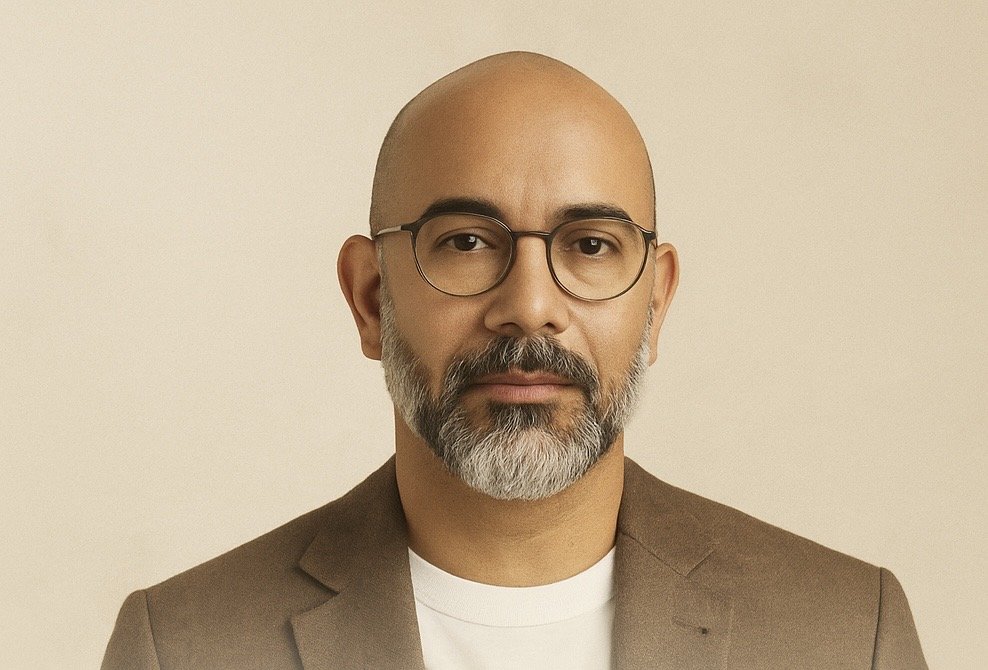
By Dr. Wil Rodriguez
TOCSIN MAGAZINE

On a crisp Tuesday morning in San Francisco’s Union Square, Maria Santos purchases her usual coffee, unaware that in the 47 seconds between entering the café and reaching the counter, her face has been scanned, analyzed, and cross-referenced against multiple databases by three different surveillance systems. Her biometric signature—more unique than her fingerprint, more revealing than her DNA—has been captured, catalogued, and commoditized without her knowledge or consent.
This is not science fiction. This is Tuesday.
Welcome to the age of ambient identification, where the simple act of existing in public space has become an act of involuntary participation in the largest surveillance apparatus in human history. Facial recognition technology, once confined to the realm of spy thrillers and authoritarian dystopias, now lurks behind the lens of millions of cameras in our cities, stores, schools, and streets—transforming every public space into a potential checkpoint in an invisible digital panopticon.
The Prometheus of Surveillance
Facial recognition technology represents perhaps the most profound shift in the balance of power between individual and state, citizen and corporation, since the invention of the printing press. Unlike traditional forms of identification that require active participation—showing an ID, providing a signature, submitting to a fingerprint scan—facial recognition operates in the shadows of our daily lives, harvesting our most intimate biometric data through the passive act of being seen.
The technology itself is elegantly simple in concept, terrifyingly complex in execution. Algorithms analyze the geometric relationships between facial features—the distance between eyes, the shape of the nose, the curve of the lips—creating unique mathematical signatures that can identify individuals with startling accuracy. Modern systems can recognize faces in crowds, through sunglasses, across decades of aging, and even when partially obscured.
What began as a tool for border security and criminal investigation has metastasized into something far more pervasive. Today, facial recognition systems monitor casino floors in Las Vegas, scan shoppers in New York department stores, track students in Beijing universities, and surveil protesters in Hong Kong streets. The technology has become democratized in the worst possible way—accessible not just to governments, but to anyone with sufficient capital and insufficient scruples.
The Seductive Promise of Security
Proponents of widespread facial recognition deployment paint a compelling picture of its benefits. In an era of global terrorism, mass shootings, and urban crime, they argue, we cannot afford to cling to antiquated notions of privacy when technology offers the promise of unprecedented security.
The numbers seem to support their case. China’s massive facial recognition network has been credited with solving thousands of criminal cases and locating missing persons with remarkable efficiency. In the United States, the FBI’s facial recognition database has helped identify suspects in everything from terrorism investigations to child exploitation cases. Retail giants report significant reductions in shoplifting when facial recognition systems are deployed, while casinos use the technology to identify problem gamblers and banned individuals.
The COVID-19 pandemic provided additional justification for surveillance expansion, as governments worldwide deployed facial recognition systems for contact tracing and health monitoring. South Korea’s extensive use of digital surveillance, including facial recognition, was widely praised for its effectiveness in containing the virus’s spread during the early phases of the pandemic.
Airport security represents perhaps the most visible and accepted application of the technology. Programs like TSA PreCheck and Global Entry use facial recognition to expedite travel while theoretically enhancing security. Passengers who once grumbled about long security lines now breeze through airports with a simple glance at a camera, trading biometric data for convenience in a bargain that feels both modern and inevitable.
The Infrastructure of Oppression
Yet beneath the veneer of efficiency and security lies a more troubling reality. Facial recognition technology is not merely a tool—it is the cornerstone of what civil liberties experts warn could become an infrastructure of oppression unlike anything in human history.
Consider the case of Xinjiang, China, where an estimated one million Uyghur Muslims have been detained in “re-education camps” partially identified through an extensive facial recognition network. The technology, marketed by Chinese companies as a solution for “public safety,” has become the technological backbone of what human rights groups characterize as genocide. Uyghurs cannot travel, work, or even worship without their movements being tracked, analyzed, and potentially used as evidence of “extremist behavior.”
The system’s capabilities extend far beyond simple identification. Advanced facial recognition algorithms can now detect emotions, estimate age and ethnicity, and even attempt to gauge political sentiment based on micro-expressions. This emotional surveillance represents a qualitative leap from traditional monitoring—transforming surveillance from observation of behavior to analysis of thought and feeling.
In the United States, civil rights organizations have documented numerous cases where facial recognition systems have produced false positives, leading to wrongful arrests and prosecutions. Robert Julian-Borchak Williams became the first known case of wrongful arrest due to facial recognition error when Detroit police detained him based on a flawed match. His case exposed how the technology’s well-documented racial bias—higher error rates for women and people of color—translates into real-world injustice.
The Algorithmic Panopticon
The proliferation of facial recognition technology creates what privacy advocates term an “algorithmic panopticon”—a surveillance state where the mere possibility of being watched changes behavior even when no active monitoring occurs. Jeremy Bentham’s original panopticon prison design was revolutionary precisely because inmates could never know when they were being observed, leading to constant self-regulation.
Modern facial recognition networks create the same psychological effect on a societal scale. When every camera potentially harbors recognition capabilities, when every public space becomes a site of potential identification, the result is what scholars call the “chilling effect” on constitutional rights.
The right to anonymous movement—to walk down a street, attend a political rally, or visit a controversial bookstore without creating a permanent, searchable record—has been fundamental to democratic society. This anonymity has protected dissidents, enabled whistleblowers, and allowed for the kind of free exploration of ideas that democracy requires. Facial recognition technology threatens to eliminate this anonymity entirely.
Dr. Shoshana Zuboff, author of “The Age of Surveillance Capitalism,” argues that we are witnessing the emergence of a new form of power she terms “surveillance capitalism,” where human experience is extracted, analyzed, and commodified on an unprecedented scale. Facial recognition represents the apex of this extraction—turning our faces, our most fundamental form of human identification, into data points in vast commercial and governmental databases.
The Corporate Gold Rush
The facial recognition industry has become a multi-billion-dollar gold rush, with companies racing to capitalize on the technology’s commercial potential. Retail giants like Walmart and Target have quietly deployed facial recognition systems to identify shoplifters and suspicious customers, creating databases that follow consumers across stores and potentially across brands.
The technology’s integration into social media platforms has been particularly insidious. Facebook’s facial recognition system, before its partial discontinuation, had analyzed billions of photos, creating detailed biometric profiles of users and non-users alike. The company’s ability to suggest photo tags demonstrated the technology’s power while revealing how little control individuals have over their biometric data once it enters corporate systems.
Marketing companies now offer “demographic analysis” services that use facial recognition to determine the age, gender, and emotional state of shoppers, allowing for real-time advertising customization. This commercialization of biometric surveillance transforms every public interaction into a potential data harvest, where businesses extract value from the simple act of being observed.
The Democratic Crisis
Perhaps the most profound threat posed by widespread facial recognition deployment lies in its impact on democratic participation and dissent. History shows that surveillance systems, regardless of their stated purpose, inevitably expand to monitor political activities.
The Hong Kong protests of 2019 provided a stark preview of how facial recognition technology could be weaponized against democratic movements. As protesters donned masks and used umbrellas to shield themselves from recognition systems, the conflict highlighted how surveillance technology fundamentally alters the power dynamic between citizen and state.
In the United States, facial recognition systems have been deployed at political rallies, immigration checkpoints, and protest sites, creating detailed records of political participation. The Department of Homeland Security’s use of facial recognition at airports means that exercising the right to travel creates permanent government records that could theoretically be used to track political associations and activities.
The technology’s impact extends beyond direct political surveillance to the broader ecosystem of democratic discourse. When citizens know that their participation in controversial events might be permanently recorded and associated with their identity, the result is self-censorship and political conformity—the antithesis of democratic vitality.
The Racial Justice Imperative
No discussion of facial recognition technology can ignore its documented racial bias and its role in perpetuating systemic discrimination. Multiple studies have shown that commercial facial recognition systems demonstrate significantly higher error rates when identifying women and people of color, with Black women experiencing error rates nearly 35% higher than white men.
This bias isn’t merely a technical glitch—it reflects the fundamental inequality embedded in the technology’s development and training. Most facial recognition algorithms have been trained primarily on datasets composed of white faces, creating systems that literally cannot see people of color with the same accuracy.
The consequences of this bias are profound. In a criminal justice system already marked by racial disparities, facial recognition technology threatens to encode and amplify discrimination. When police departments deploy biased recognition systems, the result is the technological perpetuation of racial profiling—algorithm-assisted discrimination that carries the false veneer of objectivity.
Communities of color, already subject to disproportionate surveillance and policing, bear the greatest burden of facial recognition deployment. The technology transforms existing patterns of over-policing into automated, algorithmic oppression that operates at the speed of light and scale of big data.
International Perspectives and Regulatory Responses
The global response to facial recognition technology has been decidedly mixed, reflecting deeper cultural and political divisions about the balance between security and privacy. The European Union has taken the most aggressive regulatory stance, with the General Data Protection Regulation (GDPR) treating biometric data as particularly sensitive information requiring explicit consent for collection and processing.
Several European cities, including Amsterdam and Boston, have banned or severely restricted government use of facial recognition technology. San Francisco became the first major U.S. city to ban facial recognition by city agencies, though the ordinance includes significant exceptions for airport and port security.
In contrast, authoritarian regimes have embraced the technology with enthusiasm. Russia’s facial recognition network, which can identify individuals across Moscow’s extensive camera system, has been used to detain political protesters and monitor dissidents. India’s Aadhaar biometric identification system, while primarily fingerprint-based, increasingly incorporates facial recognition elements as part of a comprehensive national identification infrastructure.
The COVID-19 pandemic accelerated global adoption of facial recognition technology, with even privacy-conscious nations implementing biometric monitoring systems in the name of public health. This “surveillance normalization” during the pandemic may have permanently shifted public attitudes toward biometric monitoring, making previously unacceptable levels of surveillance seem routine and necessary.
The Technology’s Dark Evolution
As facial recognition technology continues to evolve, its capabilities are expanding in deeply troubling directions. “Emotion recognition” systems claim to identify psychological states from facial expressions, while “behavioral analysis” algorithms attempt to predict criminal activity from walking patterns and micro-gestures.
These developments represent a qualitative shift from identification to interpretation—from answering “who is this person?” to “what is this person thinking?” or “what might this person do?” This predictive surveillance threatens to criminalize not just behavior, but intention and potential.
The integration of facial recognition with artificial intelligence and machine learning creates possibilities for surveillance that exceed even Orwell’s imagination. Advanced systems can now track individuals across multiple cameras, analyze their social networks based on co-location data, and build detailed profiles of daily routines and associations.
Economic and Social Stratification
The deployment of facial recognition technology is creating new forms of economic and social stratification. Those with the resources to avoid surveillance—through legal challenges, privacy-protective technologies, or simply avoiding surveilled spaces—maintain anonymity, while those without such resources become increasingly monitored and tracked.
This “privacy divide” mirrors broader patterns of inequality, where fundamental rights become luxury goods available primarily to those who can afford them. The result is a two-tiered society: a surveillance-free class of the wealthy and connected, and a monitored class of everyone else.
The technology also enables new forms of exclusion and discrimination. Facial recognition systems can be programmed to identify and exclude specific individuals from spaces, creating digital redlining that operates invisibly and automatically. Someone banned from one store could theoretically be banned from an entire network of affiliated businesses, all without human intervention or due process.
Technical Limitations and False Promises
Despite the technology’s rapid advancement, facial recognition systems remain plagued by significant technical limitations that proponents often downplay. Environmental factors like lighting conditions, camera angles, and image quality can dramatically affect accuracy. Crowd situations, partial obstructions, and deliberate countermeasures can render the technology ineffective.
More fundamentally, the technology’s claimed accuracy rates often don’t translate to real-world performance. Laboratory conditions with high-quality images and controlled variables produce much better results than the messy reality of public surveillance, where cameras may be dirty, poorly positioned, or technically inadequate.
The false positive problem is particularly serious in large-scale deployments. Even a system with 99% accuracy will generate thousands of false matches when screening millions of faces daily. These errors don’t distribute randomly—they disproportionately affect already-marginalized communities and can have devastating consequences for individuals wrongly identified.
The Path Forward: Regulation and Resistance
The facial recognition crisis demands urgent action across multiple fronts. Legal frameworks must evolve to address the unique threats posed by biometric surveillance, establishing clear consent requirements, data retention limits, and accuracy standards for deployment.
Several promising regulatory approaches have emerged. The European Union’s proposed AI regulation includes specific provisions for biometric identification systems, while individual U.S. cities and states have begun implementing their own restrictions. Illinois’s Biometric Information Privacy Act has become a model for other jurisdictions seeking to regulate biometric data collection.
Technical solutions also show promise. Adversarial fashion—clothing and accessories designed to confuse recognition systems—offers individual protection, while privacy-enhancing technologies can limit data collection and sharing. Some researchers are developing algorithms designed to detect and counter biased recognition systems.
Perhaps most importantly, civil society organizations have mobilized to challenge facial recognition deployment through litigation, advocacy, and public education. Groups like the Electronic Frontier Foundation, the ACLU, and international privacy organizations have successfully challenged numerous surveillance programs and raised public awareness about the technology’s risks.
The Choice Before Civilization
We stand at an inflection point in human history. The decisions we make about facial recognition technology in the next decade will determine whether we enter an era of unprecedented freedom or unprecedented oppression—whether technology serves human dignity or systematically undermines it.
The stakes could not be higher. Once deployed, surveillance systems are rarely rolled back. Once biometric databases are created, they persist indefinitely. Once the infrastructure of mass surveillance is in place, it becomes available to anyone with sufficient power and insufficient restraint—whether that’s an authoritarian government, a rogue corporation, or a future regime we cannot yet imagine.
The choice is not between security and privacy—it is between a society built on trust and human dignity and one built on suspicion and algorithmic control. It is between preserving the space for dissent, creativity, and human flourishing and accepting a world where every action is monitored, every movement tracked, and every face reduced to a data point in someone else’s database.
The technology exists. The infrastructure is being built. The question is whether we will allow ourselves to sleepwalk into a surveillance society or whether we will demand that human values guide technological deployment.
The cameras are watching. The algorithms are learning. The databases are growing. The only question that remains is whether we will act to preserve human freedom before it’s too late—or whether we will wake up one morning to find that the face in the mirror belongs not to us, but to the machines that watch our every move.
The all-seeing eye is upon us. How we respond will define what it means to be human in the digital age.
For more investigative journalism exposing the intersection of technology and power, visit tocsinmag.com

Comments