


Rick Ross Says He Is Innocent and Very Specific About His Heavy Marinara Plans

There are many ways to leave jail after being arrested on domestic violence charges. A person could say nothing. A person could let an attorney speak. A person could offer a short denial, step into a waiting vehicle, and avoid turning the sidewalk into a tasting menu.
Rick Ross, according to the scene described here, chose a different road. He denied the allegations, then immediately introduced the world to his travel calendar and pasta preferences.
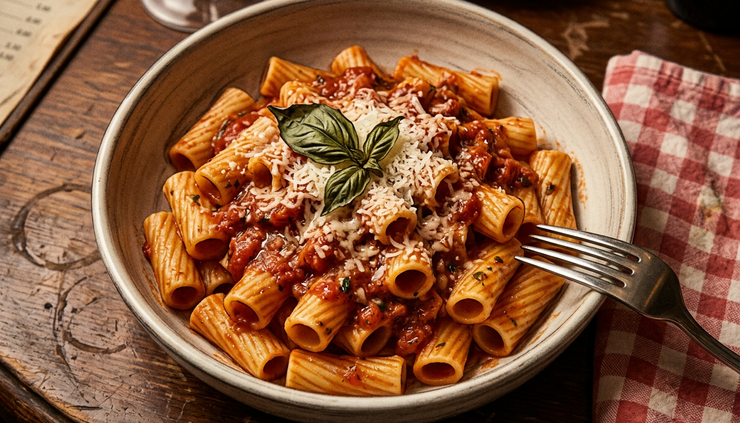
“I’m totally innocent of these fabricated allegations made against me. I’ll be in Dubai tomorrow, Paris Saturday, and I plan on having a bowl of rigatoni with heavy marinara Sunday. I repeat, heavy marinara.”
That is not just a statement. That is a legal denial wearing a linen shirt on vacation.

The presumption of innocence still matters
Let’s be clear before the marinara takes over the room. Domestic violence allegations are serious. A charge involving felony battery by strangulation is especially grave. No joke should be aimed at the alleged harm, the legal process, or anyone who may have been hurt.
The presumption of innocence matters too. Courts exist for a reason. A public arrest is not a conviction, and a sidewalk statement is not a trial.
The funny part here is not the charge. The funny part is the tonal lane change. One second, the subject is innocence and fabricated allegations. The next second, we are apparently reviewing the international pasta itinerary of a man who believes the public needed to hear “heavy marinara” twice.
That is the kind of quote that makes a publicist age seven years during one elevator ride.
The statement begins in court mode and ends in restaurant mode
A classic post-arrest statement usually has three parts:
“I deny the allegations.”
“I look forward to clearing my name.”
“I will not comment further.”
That is the standard model. It is boring. It is cautious. It is built to prevent disaster.
This statement starts in that neighborhood, then takes a private jet directly to sauce country. Dubai tomorrow. Paris Saturday. Rigatoni Sunday. Heavy marinara. Repeat, heavy marinara.
There is a confidence to it that almost becomes performance art. Most people leaving jail want oxygen, privacy, and possibly a phone charger. Rick Ross, in this version of events, wants the world to know the week is booked and the pasta will not arrive lightly dressed.
The phrase heavy marinara does more work than some entire press conferences. It says appetite. It says schedule. It says, “I am not rearranging my life for this media circus, and also somebody better not under-sauce my rigatoni.”
This is what happens when celebrity statements become lifestyle content
Celebrity culture has trained famous people to turn every crisis into content. An apology becomes a notes-app aesthetic. A denial becomes a brand refresh. A court exit becomes a travel update.
That is why this quote feels so absurd. It fuses the language of legal defense with the energy of someone announcing a very aggressive weekend on a food and travel show.
Dubai tomorrow sounds expensive. Paris Saturday sounds cinematic. Rigatoni Sunday sounds like the emotional anchor of the whole operation.
The legal system can wait, apparently. The sauce cannot.
This is where the Rick Ross innocent statement becomes less about public relations and more about character study. Some people tell the media, “The truth will come out.” Some people say, “I have faith in the justice system.” Some people give us a three-city itinerary and pasta instructions suitable for a kitchen printer.
“Table 12. Rigatoni. Heavy marinara. Guest insists.”
There is a counterargument, and it is fair
The fair counterargument is simple. Maybe the marinara line is not the problem. Maybe Ross, or anyone in a similar position, has every right to project normalcy. When people face public accusations, they often want to show they are not rattled. They want to say life goes on.
That is understandable.
There is also a long tradition of celebrities making jokes, flexing schedules, or acting casual under pressure. It can be a shield. It can be a message to fans. It can be a way to avoid looking defeated on camera.
Still, timing matters. When the allegations involve domestic violence, the vibe has to stay sober. You can deny the charges. You can defend your name. You can even maintain your work schedule.
But once you start repeating sauce density like a sacred oath, the statement becomes harder to take as disciplined messaging.

The marinara line wins because it is oddly specific
The reason this line sticks is not that he mentioned pasta. It is that he clarified the sauce level.
“I plan on having rigatoni Sunday” is already a strange detail after a jail exit. But “with heavy marinara” turns the sentence into a demand. Then “I repeat, heavy marinara” raises it to doctrine.
Specificity is comedy’s fuel. A vague dinner plan would vanish. A precise demand for extra red sauce survives.
It is the same reason “I’m going to eat later” is not funny, but “I’m going to eat six mozzarella sticks in the parking lot while my cousin keeps the engine running” is a complete movie.
Heavy marinara paints a scene. It gives the public something ridiculous to hold while the legal matter remains unresolved and serious.
And that tension is the whole point. The legal issue belongs in court. The quote belongs in the group chat.
The best PR advice would have been to stop at innocent
If a crisis consultant had been standing nearby, they probably would have tackled the microphone like a loose football after the word “fabricated.”
Stop there. Say the denial. Respect the process. Thank supporters. Leave.
Do not continue to the travel segment. Do not introduce Paris. Do not bring up rigatoni. Definitely do not repeat the marinara request unless you are speaking to a waiter who has already failed you once.
The core lesson is painfully simple. When facing serious allegations, brevity is your friend. The longer a statement runs, the more chances it has to wander into accidental comedy.
And this one wandered far enough to need a passport.

The takeaway is serious, even if the sauce is not
The allegations should be handled by the legal system, not by public guessing games. If there is an alleged victim, that person deserves seriousness. If Rick Ross denies the charges, he also deserves the legal presumption every defendant gets.
But as a public statement, this belongs in the Hall of Fame for confusing exits. It tries to say, “I am innocent,” “I am unbothered,” “I am internationally booked,” and “I require substantial tomato coverage” all at once.
That is too many messages for one sidewalk.
The safest public line would have been short and sober. Instead, the moment became unforgettable because it ended with pasta. Not just pasta. Rigatoni. Not just sauce. Heavy marinara. Repeated for the people in the back.
The law will deal with the charges. The internet will deal with the quote. And somewhere, a restaurant should absolutely check the sauce level before Sunday.


Comments